
SAP vs. Oracle ERP: Which Platform Fits Your Business Strategy?
Overview: Understanding Your Options
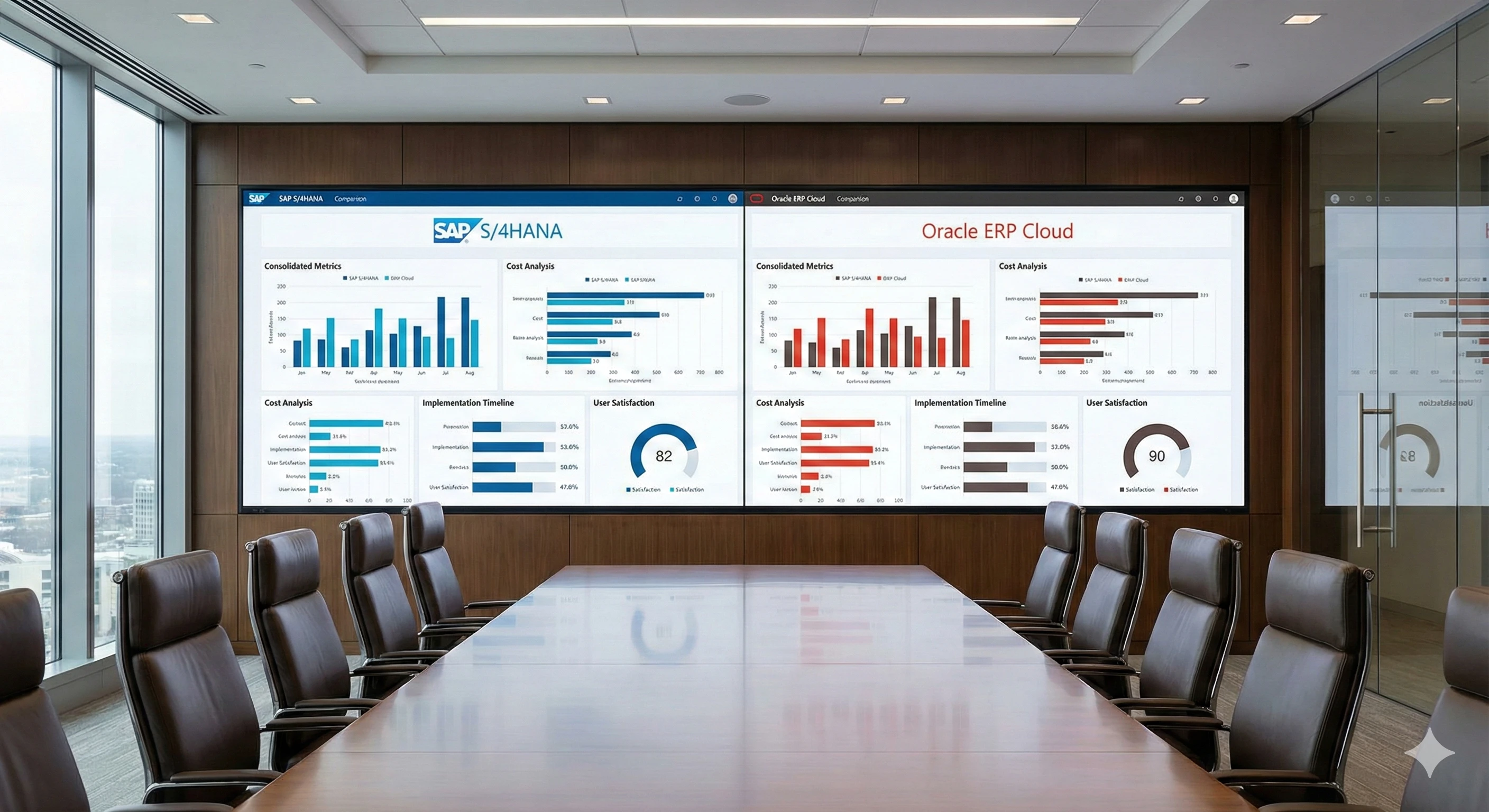
When selecting an enterprise resource planning system, organizations face a critical decision between industry-leading platforms: SAP and Oracle ERP Cloud. SAP S/4HANA emphasizes comprehensive process standardization with deep vertical integration across industries, while Oracle ERP Cloud is architected as a modern SaaS product with integrated finance, planning, and operations.
Both platforms deliver powerful enterprise capabilities, but their philosophies, deployment models, and strategic positioning differ significantly. Understanding these differences enables informed decision-making aligned with organizational priorities.
Why the Choice Matters
Selecting the right ERP platform is one of the most critical decisions an organization makes. The choice between SAP and Oracle ERP Cloud fundamentally impacts your implementation timeline, total cost of ownership, system flexibility, and long-term scalability.
Each platform represents a different philosophy: SAP emphasizes comprehensive customization and deep vertical market strength, while Oracle focuses on standardized cloud-native architecture with rapid deployment.
🎯 Key Platform Advantages
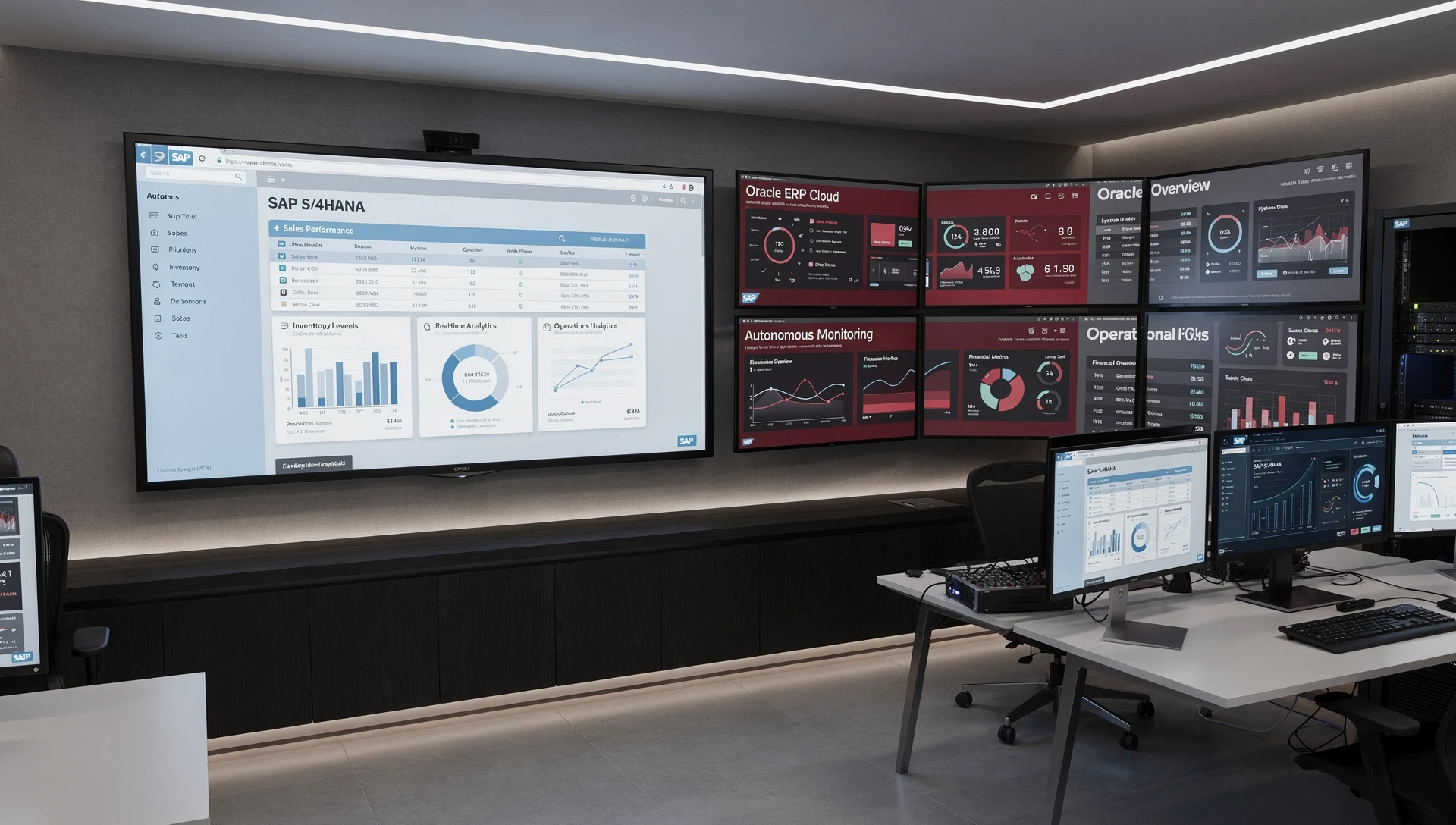
SAP Strengths: Unmatched flexibility through extensive customization, real-time analytics via HANA in-memory technology, comprehensive industry-specific solutions, superior supply chain and manufacturing capabilities.
Oracle ERP Cloud Strengths: Cloud-native SaaS architecture with automatic updates, superior integrated financial management tools, modern intuitive user interface, significantly faster implementation timelines (6-12 months vs. 18-36 for SAP).

Implementation Considerations
SAP Implementation: Extended timelines (18-36 months) requiring extensive customization, higher upfront costs, demands specialized technical expertise, requires robust change management due to system complexity.
Oracle ERP Cloud Implementation: Rapid deployment (6-12 months), predictable subscription pricing without surprise costs, minimal ongoing IT maintenance, standardized best practices streamline implementation.
📊 Platform Comparison Grid
Deployment Model
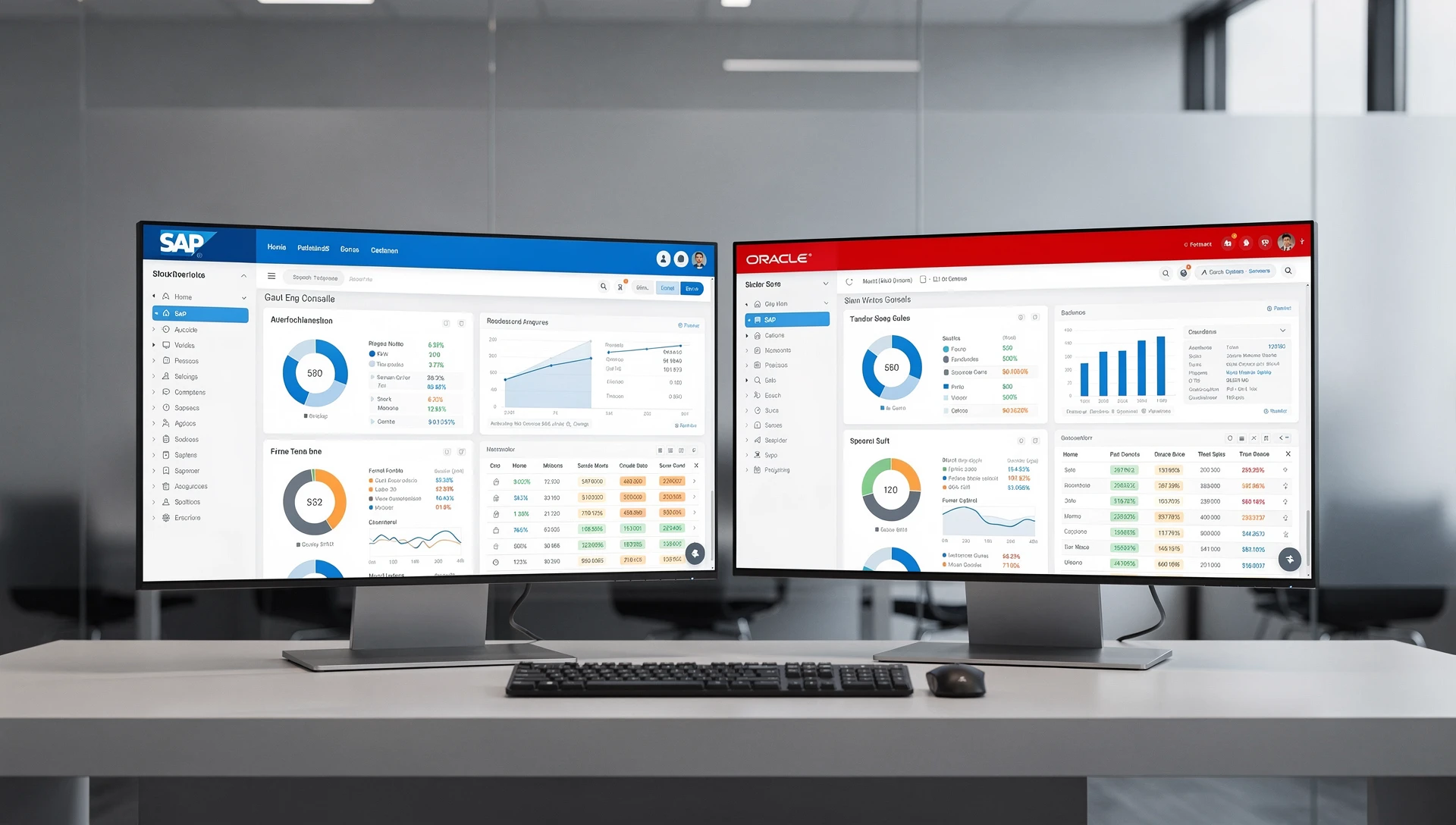
SAP: Flexible options including on-premise, cloud, or hybrid. Oracle: Cloud-only SaaS model with automatic updates.
Customization Approach
SAP: Extensive customization capabilities. Oracle: Configuration-centric encouraging best practices.
Implementation Timeline
SAP: 18-36 months typical. Oracle: 6-12 months accelerated deployment.
User Interface
SAP: Traditional interface with Fiori overlay. Oracle: Modern, intuitive, dashboard-driven.
Pricing & TCO
SAP: High upfront costs, ongoing maintenance. Oracle: Predictable subscription pricing.
Industry Strength
SAP: Manufacturing, automotive, energy. Oracle: Financial services, healthcare, education.
💡 Selection Criteria & Recommendations
Select SAP if your organization: Operates in heavy manufacturing, automotive, energy, or logistics sectors; requires deep customization; has existing SAP ecosystem; prioritizes system flexibility over implementation speed.
Select Oracle ERP Cloud if your organization: Prioritizes financial control and forecasting; prefers cloud-first architecture with automatic updates; requires faster deployment; values simplified system maintenance.
Decision Framework: Conduct comprehensive ERP assessment evaluating process complexity, regulatory requirements, industry-specific needs, IT capability, budget constraints, and timeline expectations.