
A Beginner's Guide to SAP Modules: MM, SD, FICO, HR, and More
📚 The Modular Foundation of SAP
Enterprise Resource Planning systems like SAP have become critical for organizations seeking to optimize and integrate core business operations. SAP ERP employs a modular architecture, allowing businesses to select specific functional units based on operational needs.
SAP modules function as specialized departments within the ERP system. Each handles different business areas—procurement, finance, sales, production, and HR. This flexibility means organizations can implement solutions that match their strategic priorities.

The Power of Modularity
Flexibility: Implement only the modules your organization needs. Start with core functions and add specialized modules as business grows.
Integration: Modules communicate seamlessly, creating unified data repositories and eliminating information silos across departments.
Cost Control: Organizations avoid paying for unnecessary functionality and can expand modules according to budget and business requirements.
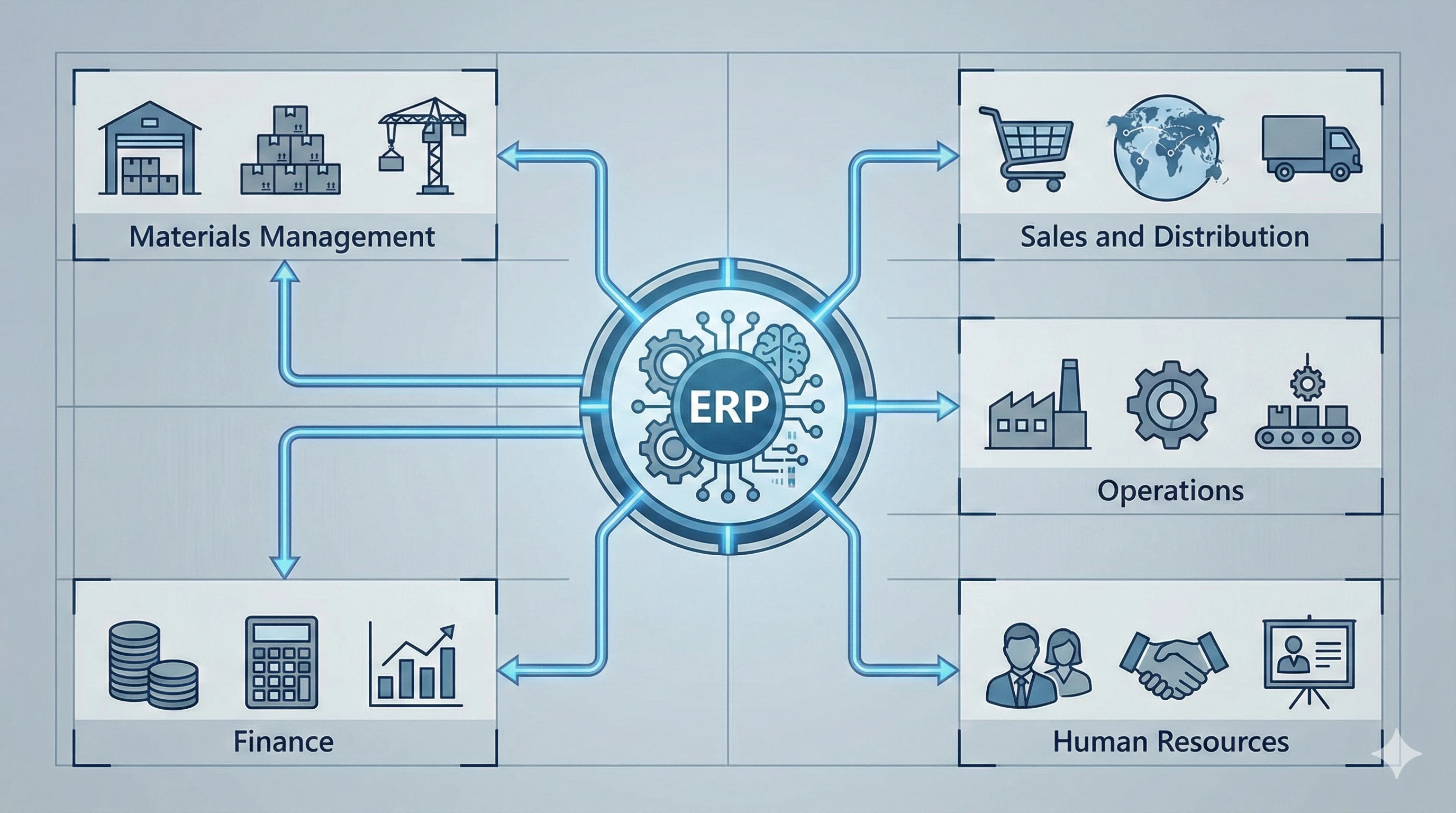
🔑 The Essential Modules
Materials Management (MM): Manages procurement and inventory including purchase orders, goods tracking, and supplier management. Streamlines procurement, reduces stockouts.
Sales & Distribution (SD): Handles the complete order-to-cash cycle with order processing, delivery, and billing. Accelerates sales cycles.
Finance & Controlling (FICO): Manages financial reporting and cost control. Provides financial transparency and enables real-time reporting.
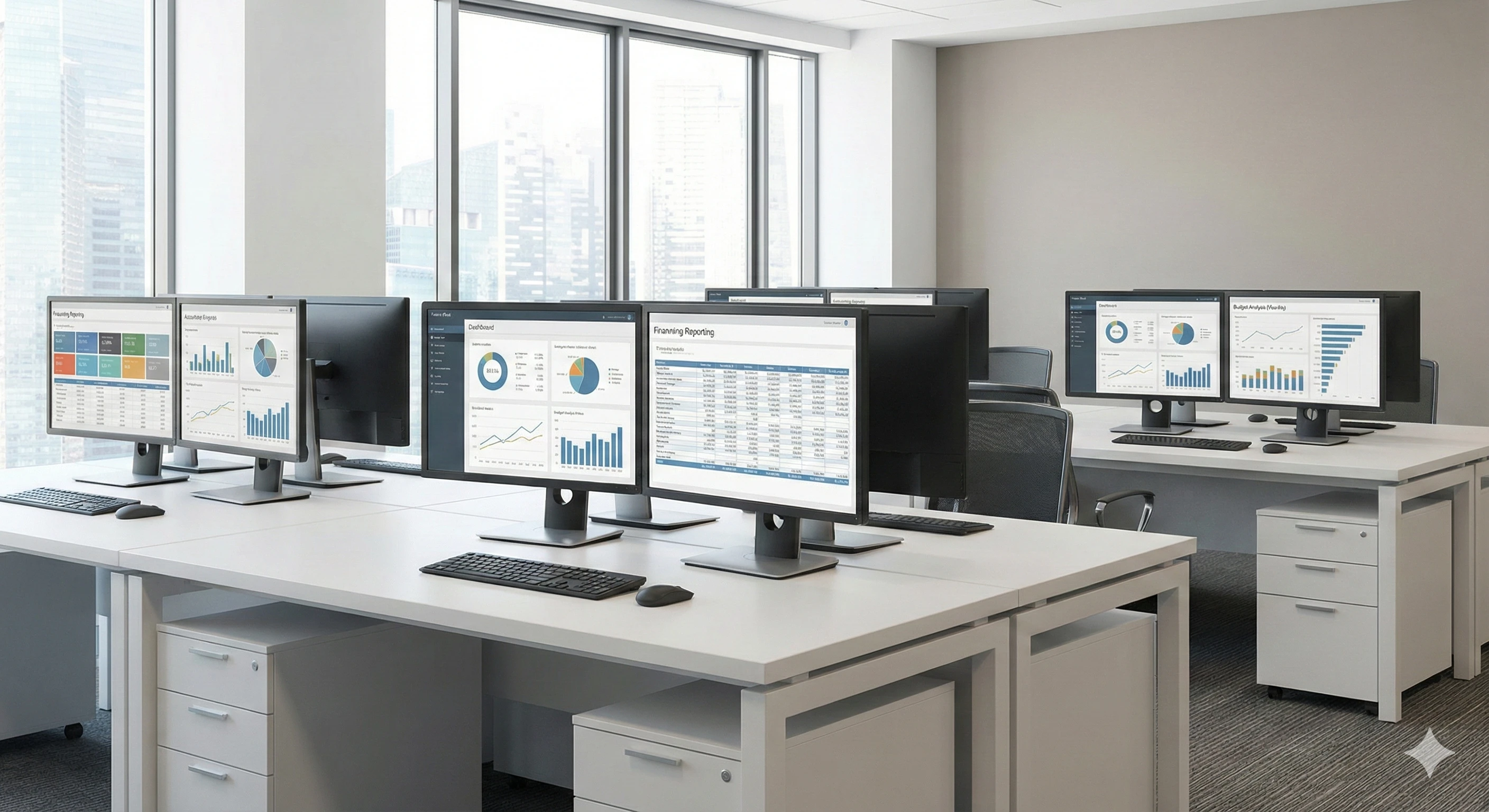
Supporting Functional Modules
Human Capital Management (HCM): Automates HR functions including payroll, recruitment, performance management. Enhances workforce productivity.
Production Planning (PP): Optimizes manufacturing operations through scheduling and capacity planning. Reduces production delays.
Quality Management, Plant Maintenance, Warehouse Management, Project Systems, Customer Service: Each addresses specialized operational needs depending on industry.
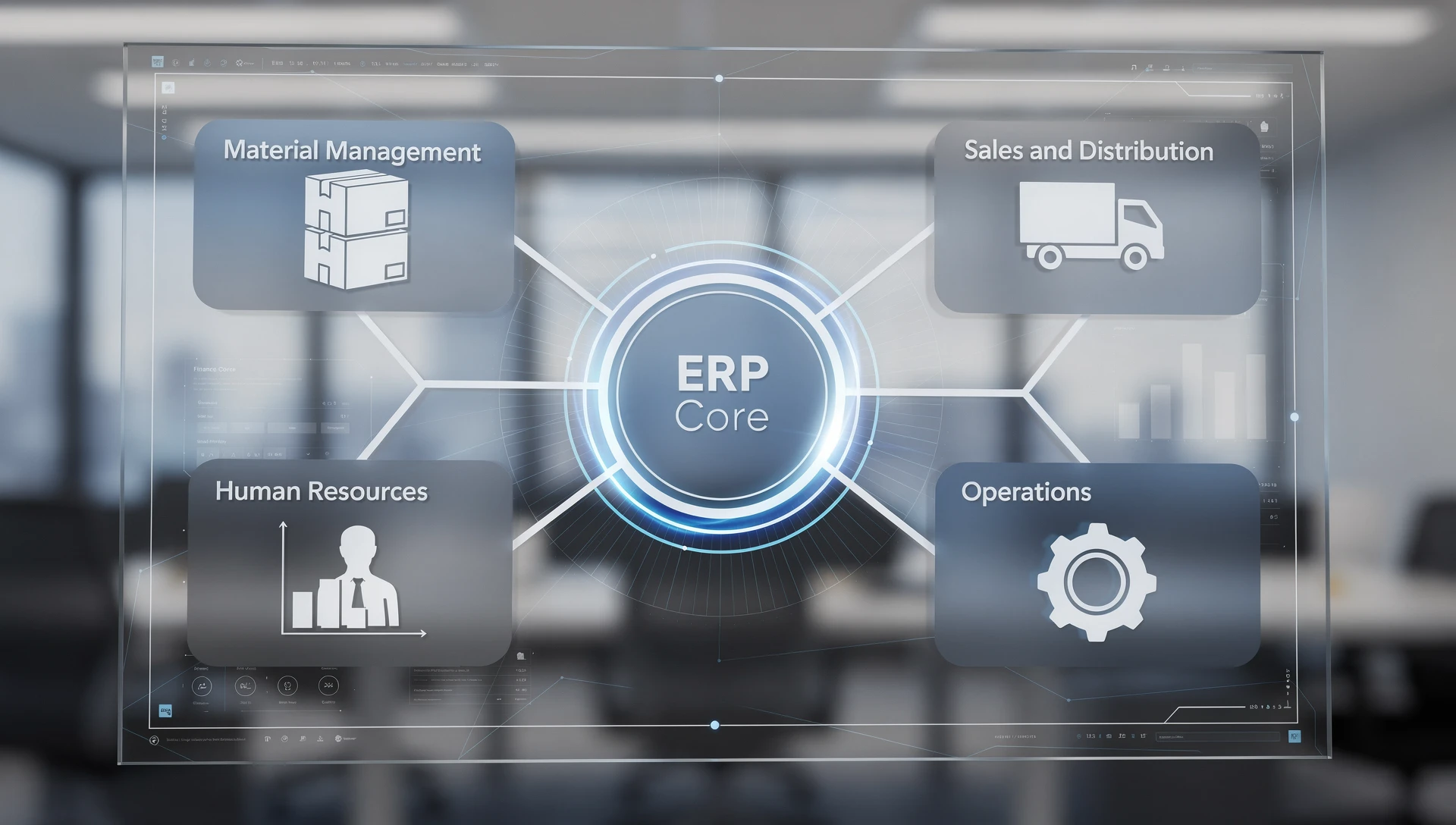
📊 Complete SAP Module Landscape
MM - Materials Management
Procurement, inventory management, purchase orders, goods receipt, supplier management.
SD - Sales & Distribution
Order-to-cash, sales orders, delivery, billing, customer management, pricing.
FICO - Finance & Controlling
General ledger, accounts payable/receivable, cost accounting, financial reporting.
HCM - Human Capital Management
Payroll, recruitment, employee development, performance management, succession planning.
PP - Production Planning
Master scheduling, capacity planning, work orders, materials requirements, manufacturing execution.
Other Specialized
QM (Quality), PM (Plant Maintenance), WM (Warehouse), PS (Projects), CS (Customer Service).
💡 Selecting the Right Modules
Evaluate Operational Pain Points: Start with modules addressing your biggest business challenges. If procurement inefficiency is costly, prioritize MM.
Assess Scalability Requirements: Consider future growth. Manufacturing companies need PP and QM. Service organizations might prioritize HCM.
Industry Fit: Different industries require different module emphases. Retailers need strong MM and SD. Manufacturers require PP and QM.
Integration Capabilities & Training Support: Ensure chosen modules integrate seamlessly. Verify your organization has or can acquire expertise.